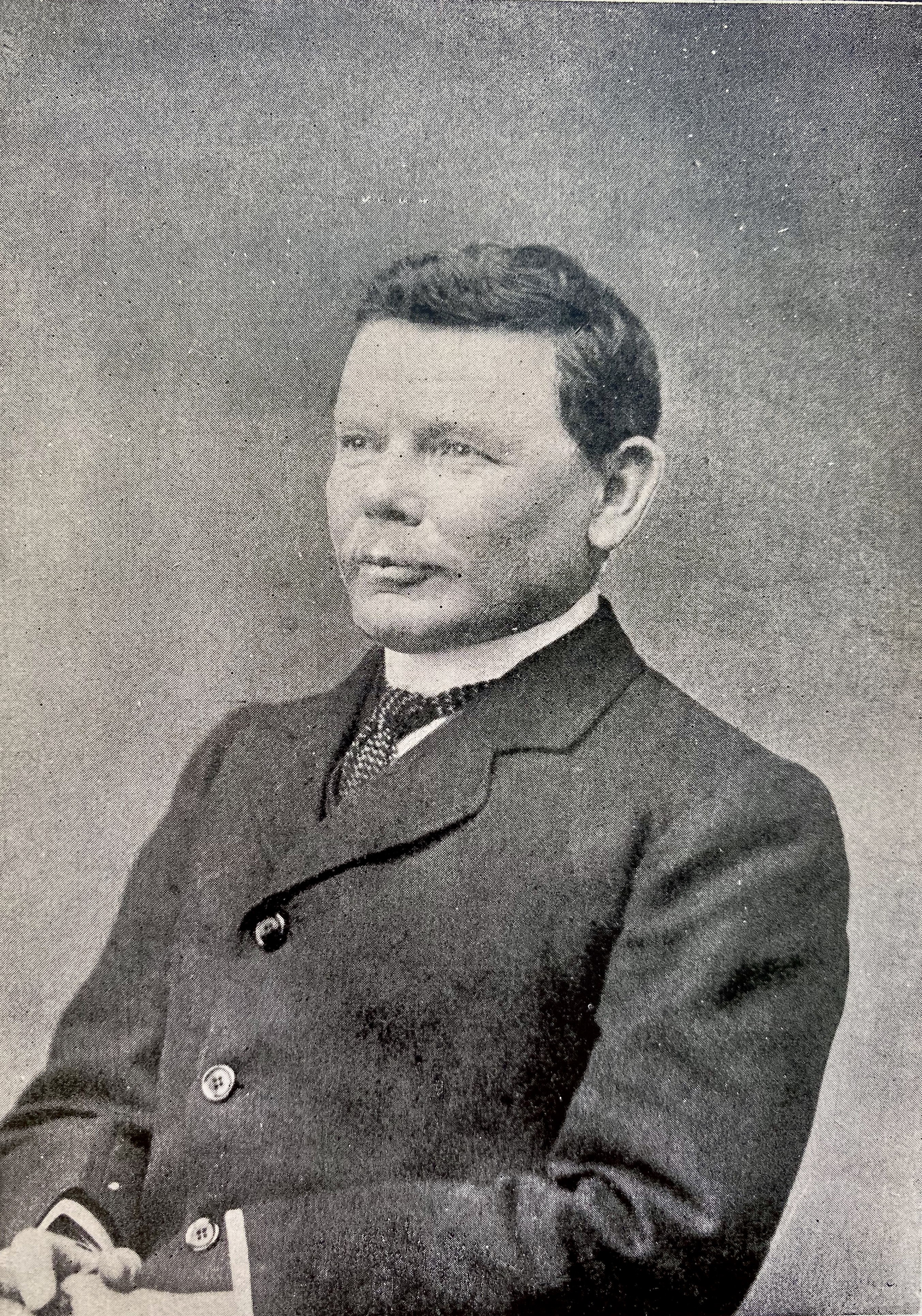
Surgeon’s Report re Samuel Cornell Plant, Deceased
“Samuel Cornell Plant embarked, together with Mrs. Plant & two Chinese girls on board S.S. Teiresias 23rd February 1921.
“I was called to see him first on the afternoon of following day. I was told that he had been ill for a week and that he was suffering from a malarial attack, but on examination advanced pneumonia was evident…it was obvious that the odds were against the patient.”
Interview with S.S. Teiresias Captain, Doctor and Purser by Captain Plant’s brother
“Captain Riepenthausen stated that [Captain Plant] and his wife were evidently in a very bad state of health when they came aboard at Shanghai, and had they been medically examined they would have certainly been sent to a nursing home and not allowed to commence the voyage.”
“His wife told the captain that my brother had been ill and vomiting violently a few days previously whilst at Shanghai, and that she had given him hot whisky and made him wrap in blankets and go to bed.”
“The next day, however, an urgent message came for him to survey, before sailing, an up-river vessel in Kiagnan Dry-Dock, and the morning following the above seizure, he went out to perform his duty. The weather was cold and undoubtedly this survey was the prime cause of his condition when he sailed.”
“Everything was done to save his life on the part of the doctor and all concerned, but without avail.”
“The captain suggested that, seeing my brother was dead, would it not be advisable to send back the two girls from Hong Kong, but Mrs. Plant told him “No!” They must continue on with her as it was my brother’s intention to educate them for a time in England and then send them back to China.”
PLANT MEMORIAL FUND
Captain Plant was buried in Happy Valley Cemetery in Hong Kong and a monument was established on the shores of the Three Gorges at the site of Plants’ home on the shores of Hsintan.

Lieutenant Commander Glenn Howell, United States Naval Institute Proceedings
When [Captain Plant] was ready to retire the Chinese government built him a bungalow. Some forty miles above Ichang the Hsintan lies at the head of a beautiful gorge five miles long. As one looks up this gorge one sights a prominent hill which towers over the bend in the river in which rages and roars the Hsintan, always difficult and dangerous but at certain seasons of the year the most dreaded and vicious rapid in the river. On top of this precipitous hill, almost overhanging the Hsintan and with a beautiful view down the gorge, was located Captain Plant’s bungalow, in which he planned to spend his declining years. Urged to retire to Hankow or to Shanghai the captain shook his head, smiled, and explained that this wild region had for twenty years been the only home known by his wife and himself.”


Plant Memorial Fund
“A subscription was started at Ichang for a monument in Captain Plant’s memory. The response was immediate. Gunboat officers, masters of merchantman, pilots, Chinese merchants, foreign civilians and Chinese friends gave freely and an oversubscription resulted. The bungalow was taken down and removed, and in its place a slender, gleaming white stone shaft now arises. On the down-river side – the direction from which the foreigners came – is an inscription in English. On the up-river side is the same inscription in Chinese.” – Lt. Howell

The Plant Memorial Fund not only raised money for the granite obelisk on the shores of the Three Gorges, it also established a trust fund for the Plants’ two adopted Chinese girls who were traveling with them during that fateful journey to England.
